A campaign manager for D&D 5e One tome for the whole campaign.
Dungeon Grimoire keeps your NPCs, maps, quests, calendar and combat in one book. Prep night gets shorter, and on game night you can look at your players instead of your tabs.
Free to start, no card. Always free for your players.
2726 modules one browser tab players always free AI only if you ask for it
IPrep night
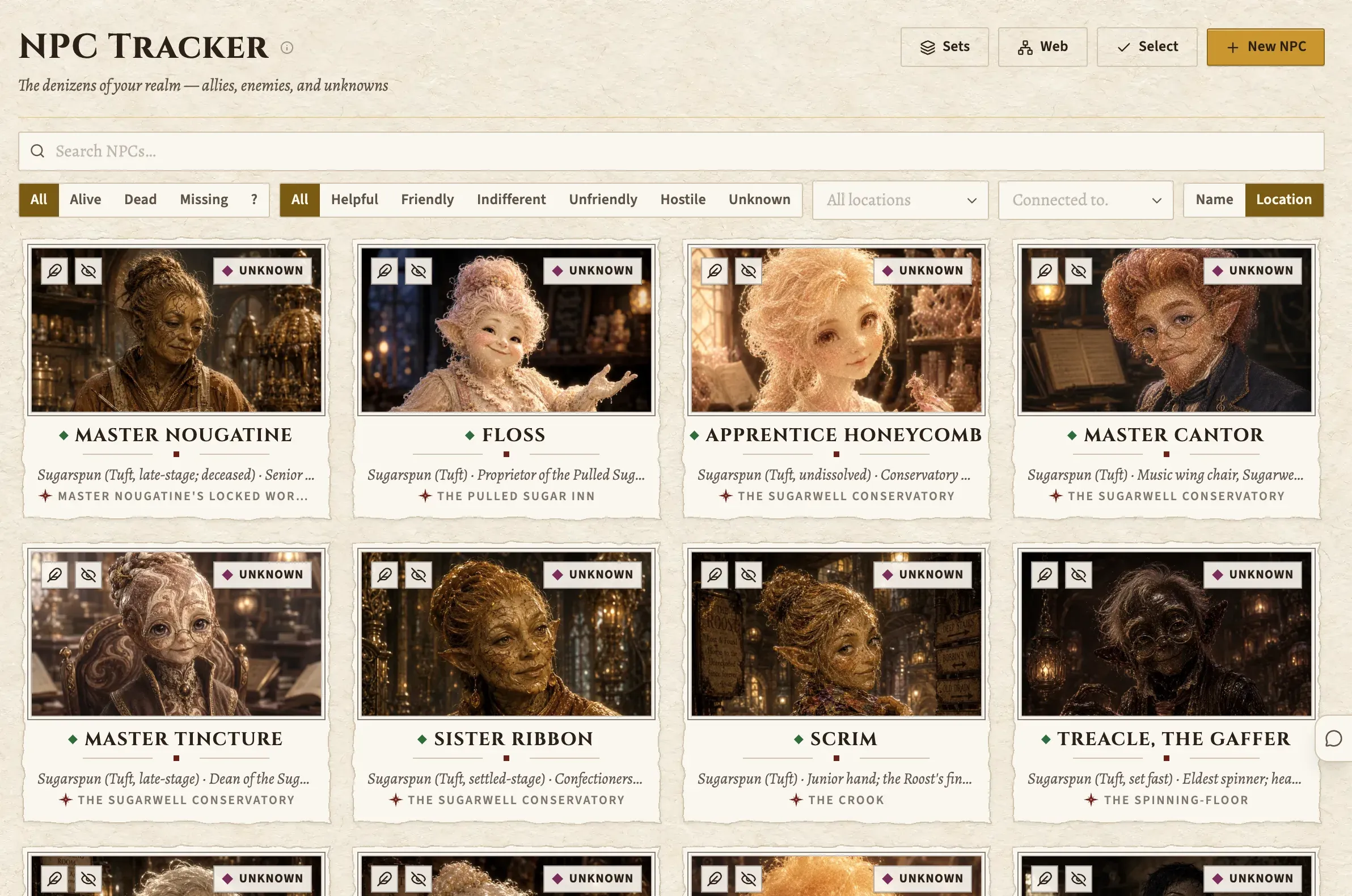
Write it down once. Find it again on game night.
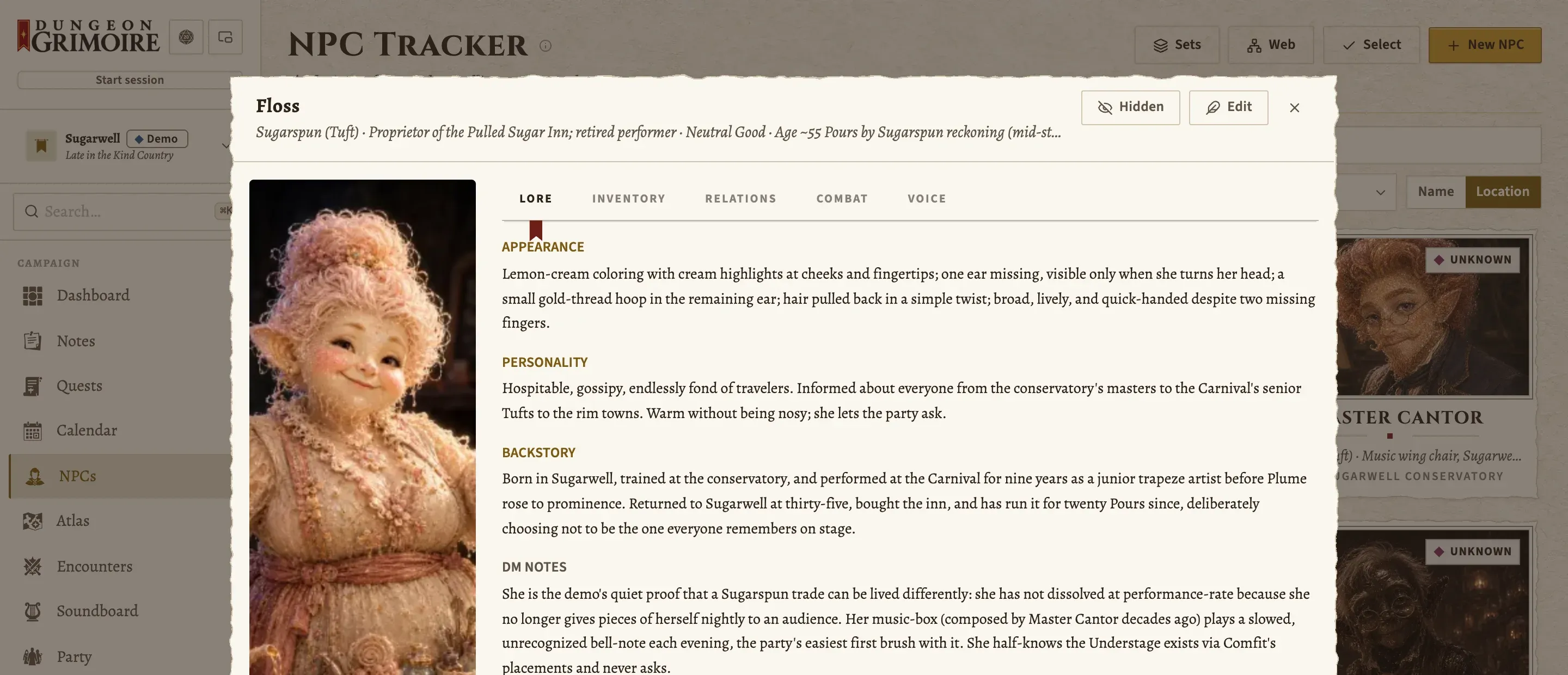
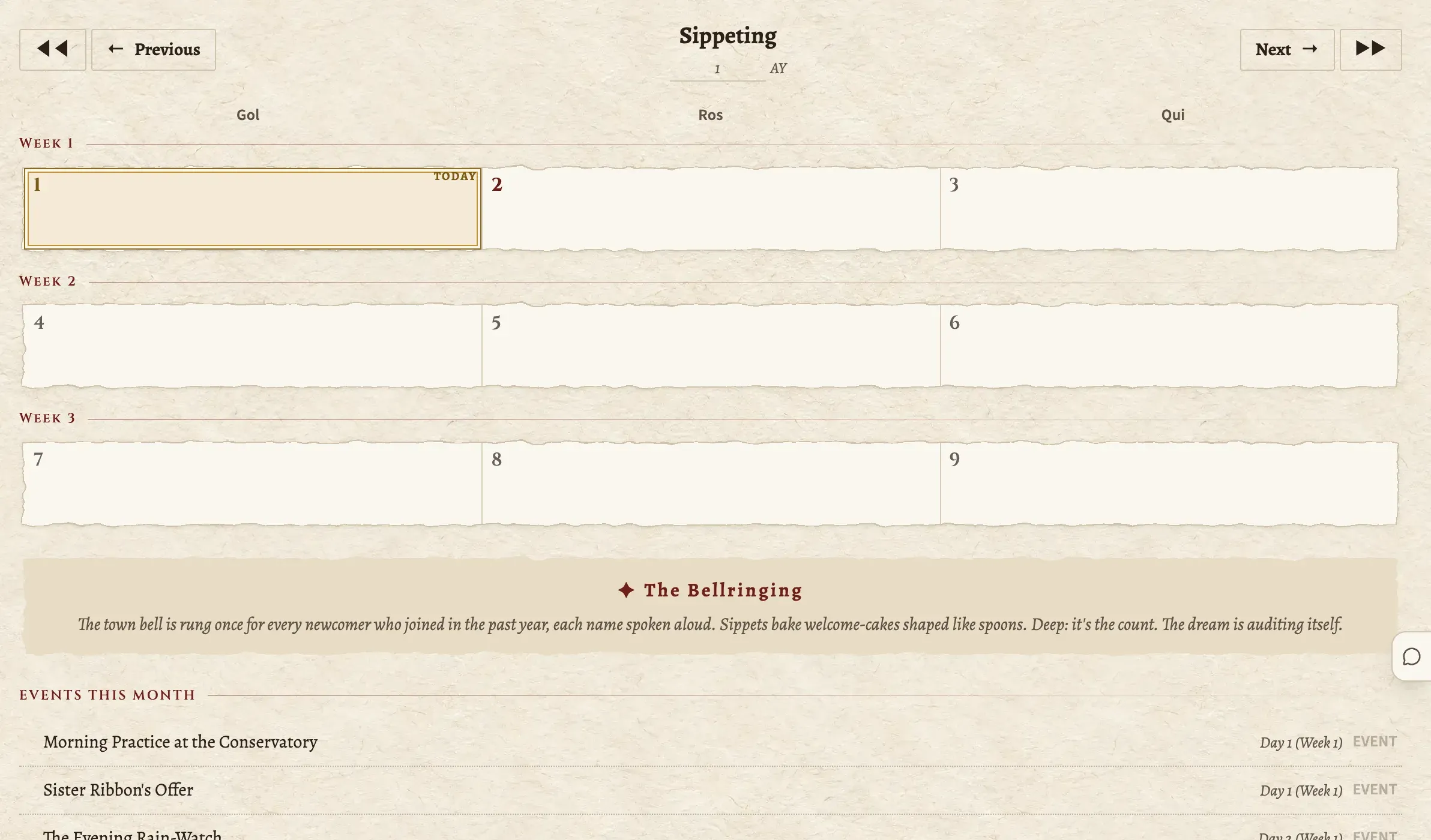
Your campaign already lives somewhere: a notebook, three documents and the part of your head that wakes you at two in the morning. Grimoire gives it one home. NPCs know where they live, quests know who is involved, and the calendar keeps your setting's own months.
IIAt the table
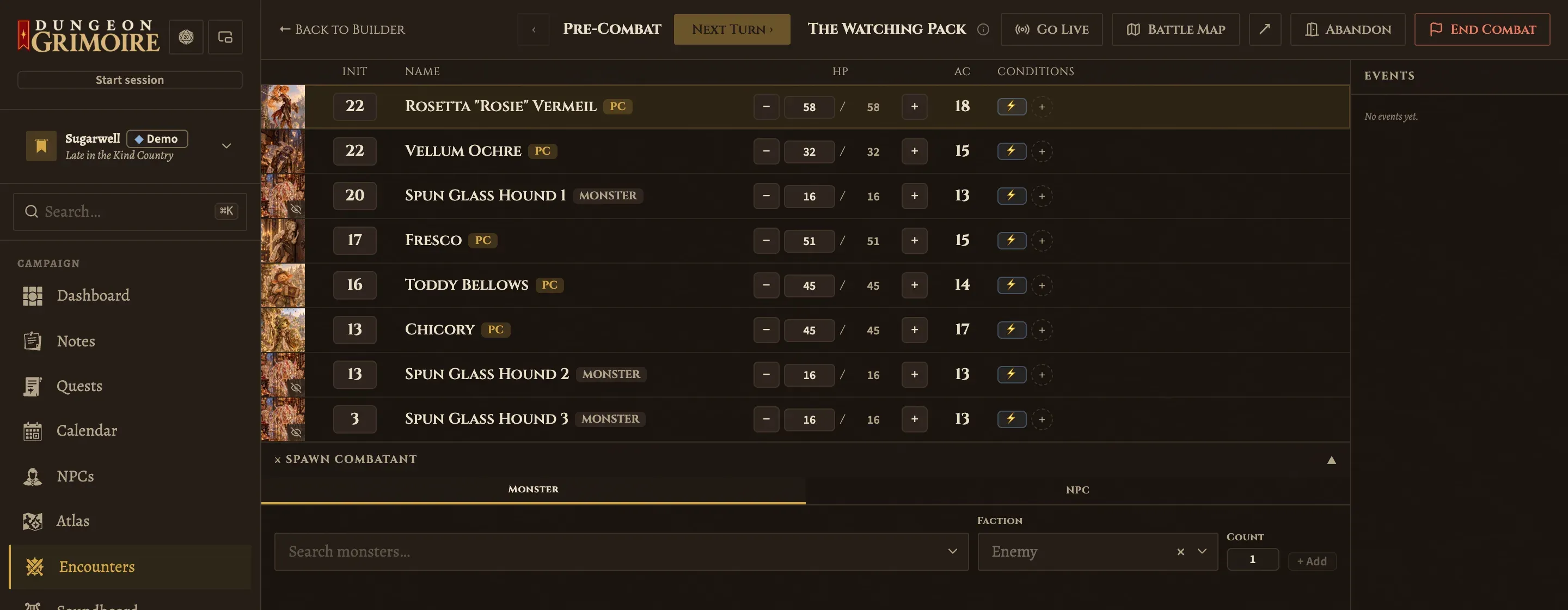
Dim the lights. The book follows.
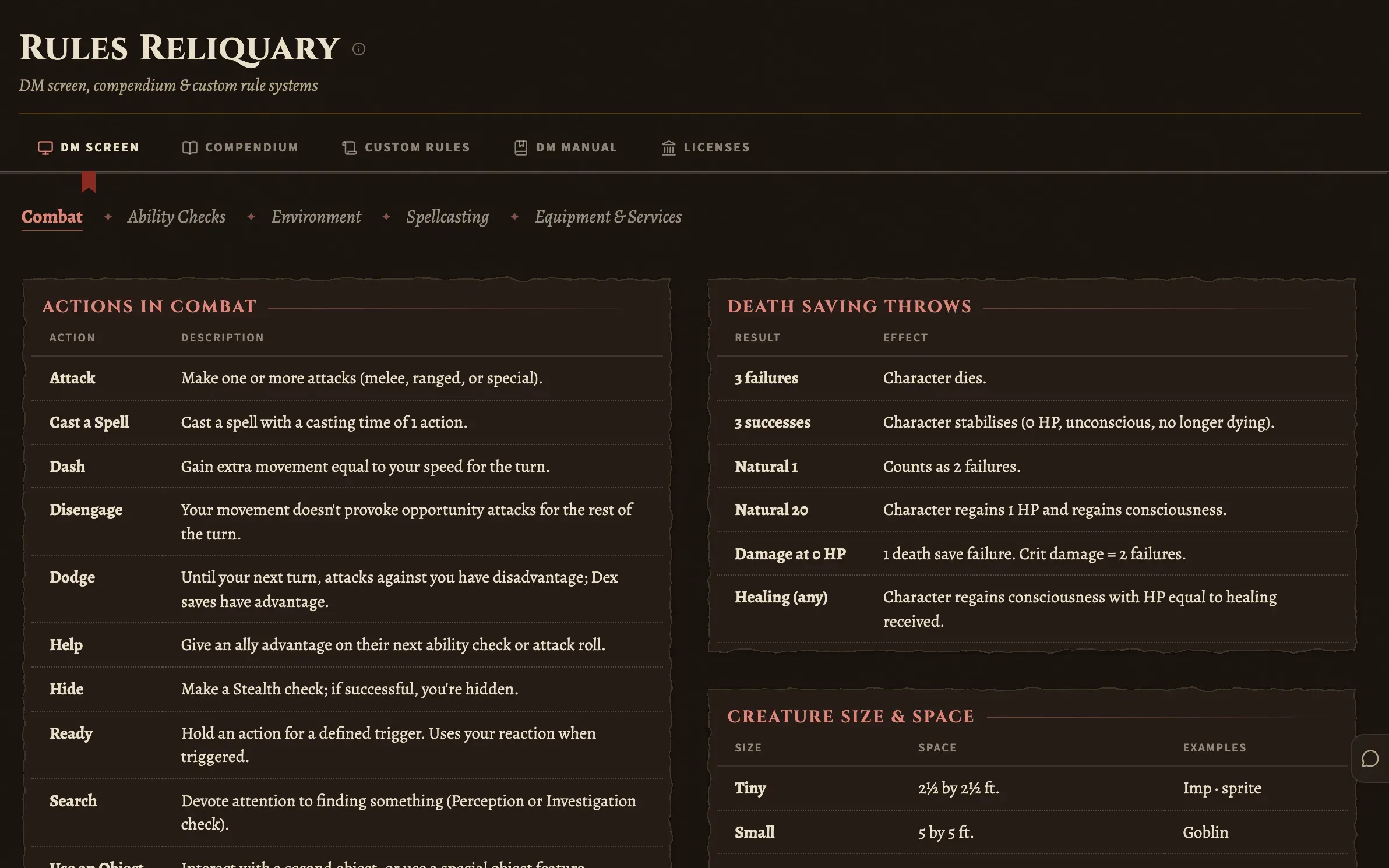
Lamplight is the same book after dark, for the hours when the only light at the table should be a candle and somebody's phone. Run initiative, look up a rule and cue the tavern noise without leaving the page.
IIIYour players
Your players never pay.
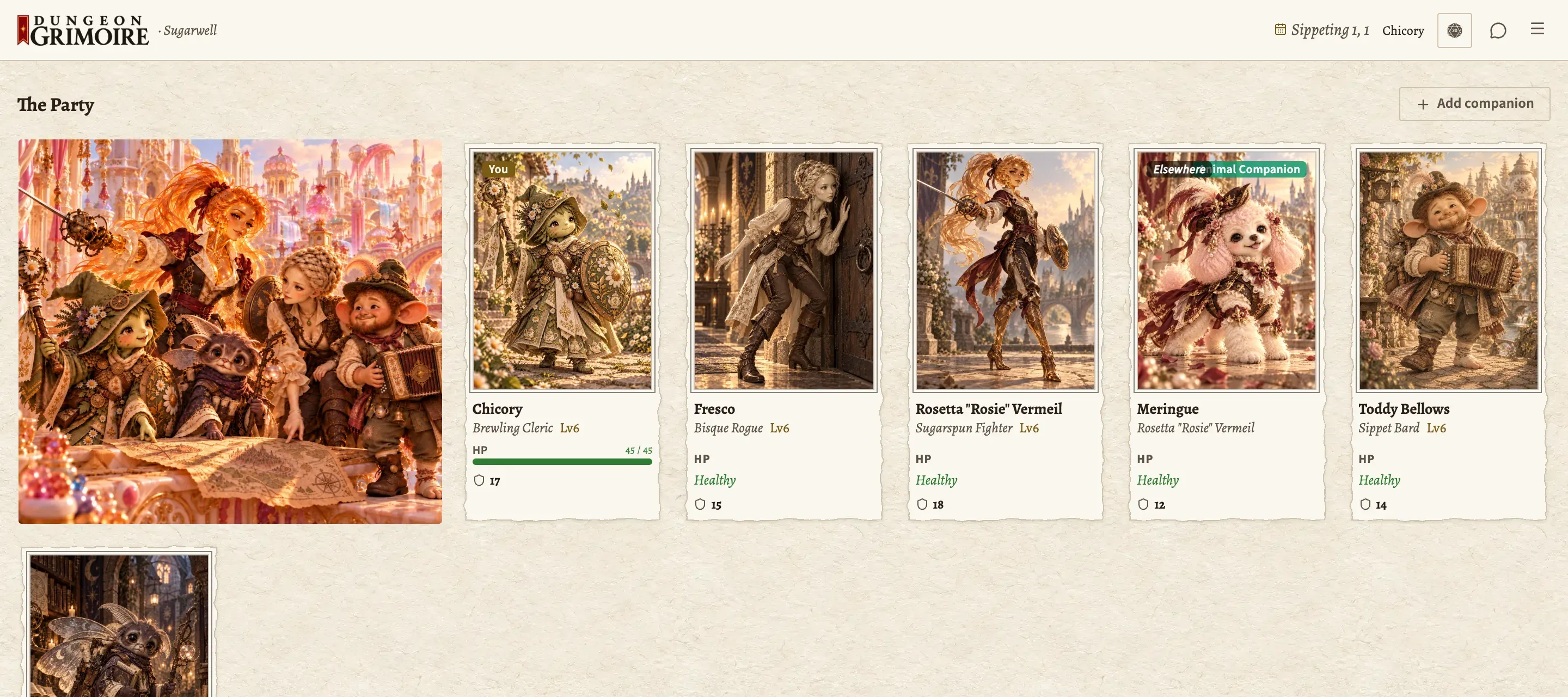
The Player Portal is free for everyone at your table, on every plan. They get their own side of the book: a character sheet, an inventory, a journal, the quest log and whatever you have chosen to share.
You decide what is visible. A secret stays a secret until you open the eye on it.
IVOn paper
Some of it belongs on the table.
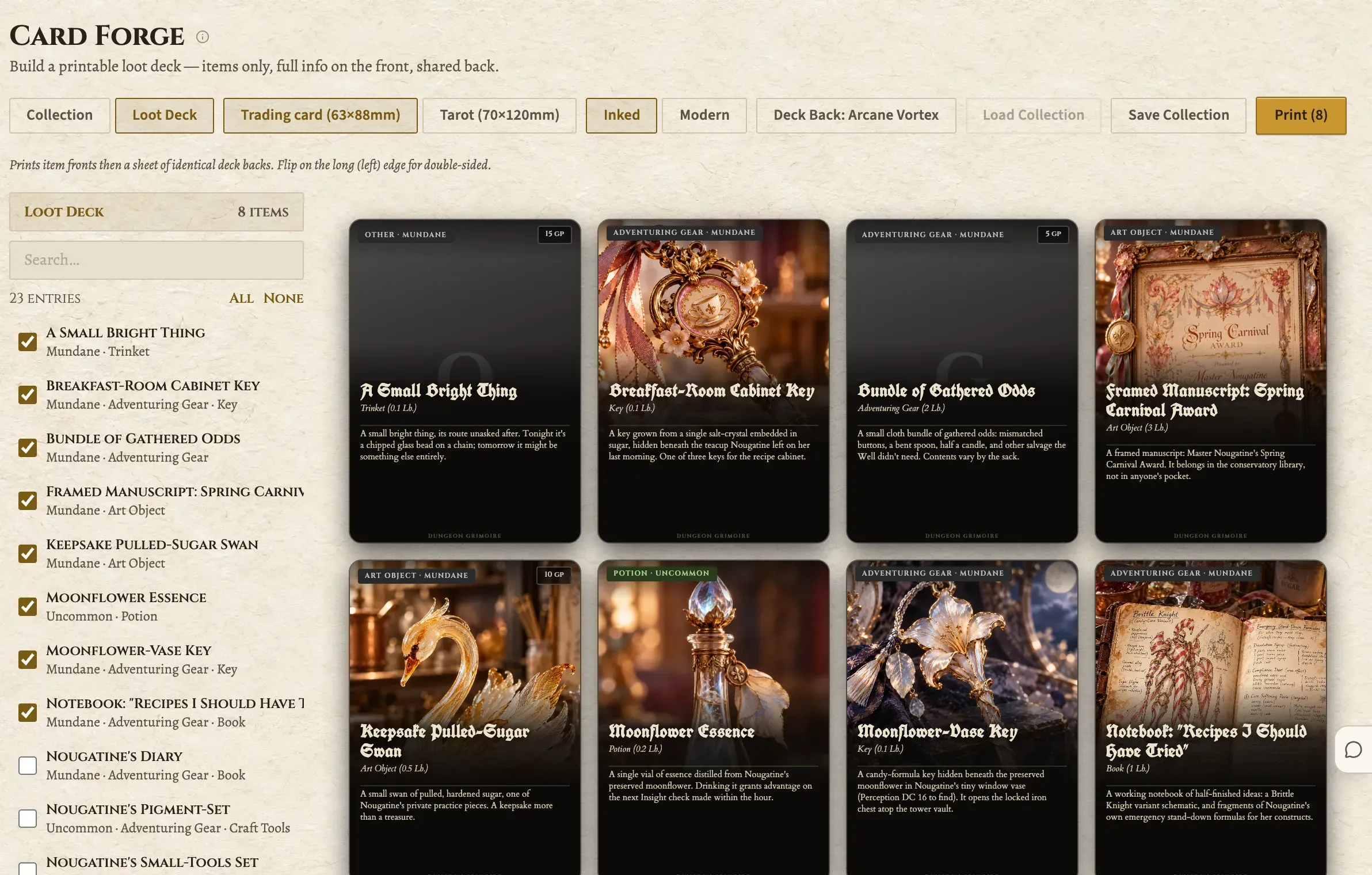
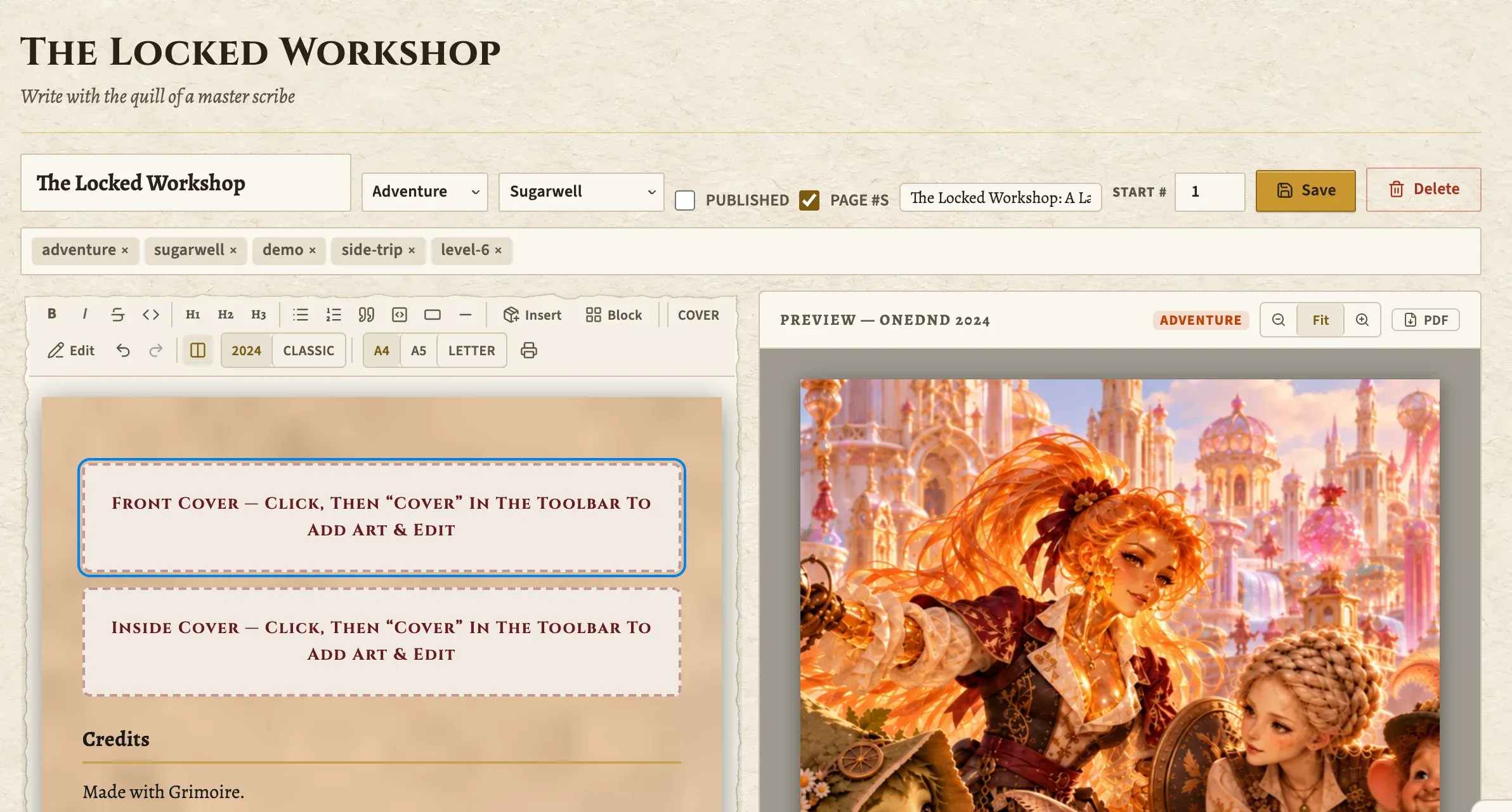
A card to slide across to the player who found the sword, or a whole loot deck with a shared back for the party to draw from. A handout that looks like it came out of a rulebook. A character sheet somebody can spill tea on. Much of what is in your campaign can leave the screen as a page you print.
VContents
2726 modules, one binding.
Every one of them has its own page. Start with the one you'd miss most.
Campaign
- Encounter Runner Build and run combat
- Soundboard Ambient sounds and music
- Player Portal Your players' side of the book
- Atlas Realms, cities and dungeons
- Calendars Your setting's own calendar
- Quest Log & Factions Quest log, guilds, cults and powers
- Workshop Recipes and player crafting
- NPCs Non-player characters
- Pantheon Gods, deities and divine lore
- Interlude Downtime draws and outcomes
- Party Track heroes and initiative
- Notes Session notes and lore
Compendium
- Character Codex Species, backgrounds and classes
- Economy & Inventory Coins, purses and magic items
- Bestiary Monster builder and compendium
- Spellbook Custom spell compendium
- Reliquary DM screen, rules and custom systems
- Dungeon Craft Secret doors, traps and hazards
- Loot & Roll Tables Tables that drop real items
- Hall of Heroes Iconic characters for any campaign
Publish
- Card Forge Cards for NPCs, monsters, items and spells
- Scriptorium Craft and export documents
- Cartographer Battle maps and dungeon layouts
- Portrait Gallery Every portrait in one place
- Character Sheet Printable character sheets
- The Mint VTT tokens and printable coins
- Illuminator Edges and effects for your images
The AI tools are opt-in: Grimoire asks when you start a campaign, and every module works the same without them. AI is switched off on this site. Every module works just the same.
VICompared
You, but with fewer browser tabs.
Every table has its own setup. This is the quick workflow comparison.
Want it with names on? Compare Grimoire with D&D Beyond or Roll20.
| Pen, paper and 12 tabs | Other campaign tools | Dungeon Grimoire | |
|---|---|---|---|
| Set up an encounter | Index cards everywhere | Depends on the tool | Drag, drop, done |
| What players pay | Free (it's paper) | Varies by plan | Always free |
| Turn AI fully off | It's a pencil | Depends on the tool | One toggle |
| Printable character cards | Laminator at the ready | May need another tool | Card Forge |
| Homebrew that looks pro | Comic Sans, sadly | Varies by workflow | Scriptorium |
| Still shipping features | n/a | Check their current roadmap | Actively, today |
| Plays at a real table | Yes! | Built for different setups | Built for it |
VIIThe price
Two plans. Your players are on neither.
Free is a real plan, with the encounter runner, the soundboard and Card Forge in it. Pro is for when your world outgrows the shelf, and it is what keeps the servers on.
- Players
- Free, always
- Everyone at your table, on every plan.
- Free DM
- Free
- Card Forge, the full encounter runner and the soundboard included.
- Pro DM
- €12.99 a month
- Unlimited campaigns and content, and every module. €8.25 a month if you pay by the year. 1,500 AI credits a month, if you want them.
VIIIQuestions
Questions a DM would actually ask.
Do my players have to pay?
No. Ever. The Player Portal is free for everyone at your table, no matter which plan you're on. You upgrade for DM superpowers; they just show up and play.
Is this a VTT?
No. Grimoire is built to support in-person or voice play: keep your prep, notes and encounter tools together while you stay focused on the people at the table.
Can I really turn the AI off?
Completely, and you don't have to go looking for it. The first time you open a campaign, Grimoire asks whether you want AI at all. Say no and nothing generates: no nags, no “sprinkle of magic,” no asterisks. Change your mind later with one switch in campaign settings.
What do the 1,500 AI credits do?
On Pro, they power NPC generation, stat cards, read-aloud text, plot hooks and more, at 1,500 a month. Plenty for prep night when the session's tomorrow. Don't want them? See the switch above.
Is the AI stuff legal in the EU?
Yes, and not by accident. The EU AI Act's transparency rules took effect in August 2026, and Grimoire meets them today instead of coasting on the grace period. Turning AI on is an explicit choice for each campaign. Everything generated wears an AI badge, images and music carry invisible machine-readable marks, and flipping AI off later never quietly unlabels what it made.
Is it ready to use?
Yes. Start a campaign, bring in your own NPCs and homebrew, and run a session with the tools that are already there. New features continue to arrive as the product grows.
Is Card Forge free?
Yes. Card Forge is included in the Free DM plan, so you can turn the NPCs, monsters, items and spells in your campaign into printable cards without upgrading. Pro adds room for larger campaigns and monthly AI credits.
What content is included?
Open5e monsters and SRD content, free sound libraries and community material come built in. Everything that's free to us is free to you, and free to your players.
Will my homebrew look official?
The Scriptorium styles documents like the 2024 PHB, and gives you the stat blocks, callouts and page furniture as blocks you pick rather than markup you write. Your cursed pun has never looked so legitimate.
Your players are already arguing about initiative.
Start free, with a real campaign. No card.